
By Adejumo Kabir and Dr Ola Bello
As Nigeria’s commercial capital and Africa’s second-largest city economy, Lagos approaches its February 2027 governorship election, two significant political engagements have offered voters, businesses and other stakeholders an opportunity to examine the priorities and policy proposals of those seeking to govern the state.
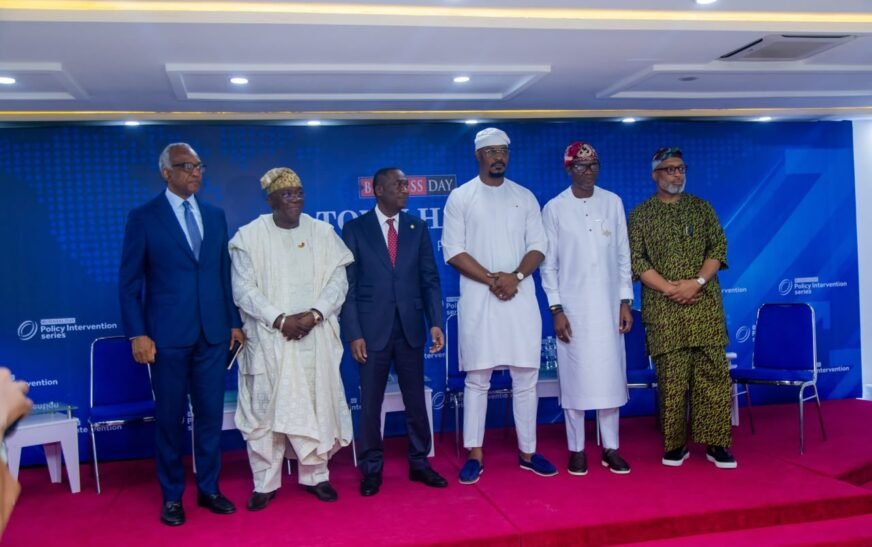
The first was the Lagos governorship debate organised by the Nigeria Debate Consortium on 8 November. The second was the BusinessDay Policy Intervention Series: Town Hall with the Organised Private Sector, held on 13 November. While the events differed in format, audience and emphasis, both provided an important platform for candidates to articulate their visions and respond to questions about the future of Lagos.
The consortium debate brought together four candidates: Obafemi Hamzat of the ruling All Progressives Congress (APC), Gbadebo Rhodes-Vivour of the African Democratic Congress (ADC), Olufunso Doherty of the Nigeria Democratic Congress (NDC), and Adedeji Doherty of the Peoples Democratic Party (PDP).
Related Posts:
- FULL TEXT: Dapo Olorunyomi’s lecture at Ajayi Crowther University on Nigerian journalism
- ‘Accumulation is not development’ – Odukoya urges Africa to build productive capacity
- Education key to breaking poverty cycle in African suburban communities – Ogundipe
- From Borno to Oriire: 2,573 abducted in 31 violent Nigerian school attacks over 12 years
Five days later, BusinessDay convened six governorship candidates before representatives of the organised private sector. In addition to the four candidates who participated in the earlier debate, the town hall featured Laja Adeoye of the Allied Peoples Movement (APM) and Oluwapamilerin Odunaike of the Labour Party (LP). Discussions focused more directly on the business environment, taxation, electricity, industrial expansion, employment, housing and the economic prospects of Lagos.
For Good Governance Africa (GGA-Nigeria), participation in both engagements offered an important opportunity to assess the candidates’ visions and policy priorities. The platforms moved the electoral conversation beyond campaign rhetoric, creating space to scrutinise their proposals and preparedness to govern.
Enormous economic potential, persistent development challenges
Lagos occupies a strategic position in Nigeria’s political and economic landscape, as its economic strength and revenue-generating capacity give it significant opportunities to shape development beyond its borders. Yet, this potential exists alongside persistent challenges affecting residents and businesses.
Despite over ₦1.7 trillion in annual internally generated revenue, Lagos continues to face infrastructure deficits, unreliable electricity, congestion, high housing costs and land administration bottlenecks.
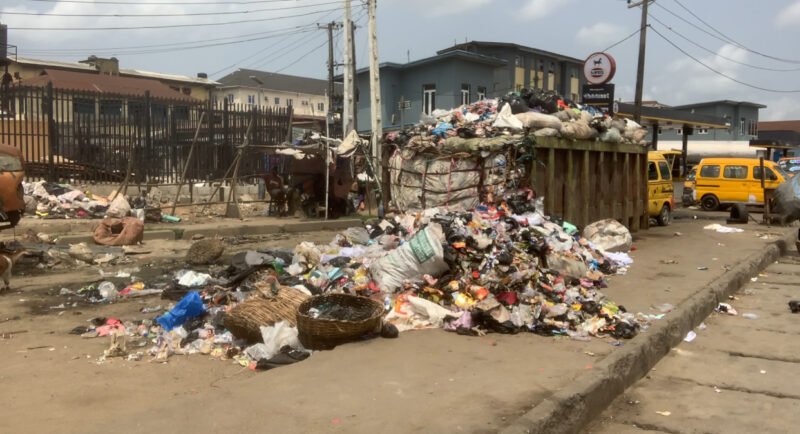
Traffic congestion raises transportation costs and reduces productivity. Multiple levies and complex regulatory processes increase operating costs, particularly for small and medium-sized enterprises. Flooding, inadequate drainage, uneven access to public services, pressure on healthcare facilities and the condition of roads in several communities expose the gap between Lagos’ economic potential and the everyday experiences of its residents.
The challenge, therefore, is not simply to grow Lagos’ economy or attract more investment, but to ensure that economic growth delivers better public services, decent livelihoods, inclusive opportunities and improved living conditions for residents.
Different proposals
The 8 November debate revealed different approaches to the state’s development challenges.
On housing, Rhodes-Vivour proposed delivering 100,000 housing units over four years, with financing partly linked to a proposed luxury tax. Funso Doherty pledged 150,000 affordable homes and advocated a stronger public-sector role in social housing.
For his part, Adedeji Doherty proposed a government-backed arrangement under which the state would rent properties from landlords and sublet them to residents. Hamzat who is the current deputy governor of Lagos proposed incentivising developers to invest in areas they might otherwise consider commercially unattractive with the support of the government.
While the proposals reflect differing views on the government’s role in addressing Lagos’ housing deficit, the scale of the challenge demands more than ambitious targets. Candidates must spell out where the homes will be built, how land will be acquired, how construction will be financed, what affordability will mean for low- and middle-income households, and how essential infrastructure will be provided in new developments.
Transportation provided another example of the candidates’ differing policy approaches. Their proposals covered rail expansion, bus rapid transit, water transportation, bridges, road improvements and greater private-sector participation. Hamzat emphasised completing and expanding existing transport infrastructure, while Rhodes-Vivour advocated a more decentralised system built around water transport, shorter bridges and improved inner roads. Funso Doherty called for modernising the transport system and addressing the influence of informal transport operators, while Adedeji Doherty proposed constructing additional major bridges.
Candidates also spoke on recurrent flooding, including wetland protection, improved drainage, better environmental planning and infrastructure development. For a coastal and densely populated state such as Lagos, flood management cannot be reduced to occasional emergency responses. It requires consistent enforcement of land-use regulations, credible environmental assessments, regular drainage maintenance, climate adaptation measures and the protection of natural waterways.
Business environment must serve public interest
By bringing candidates before organised private-sector stakeholders, BusinessDay town hall created an opportunity to examine how their policies might affect investment, business sustainability, job creation and productivity.
Tax administration emerged as a major area of discussion with candidates broadly acknowledging the burden that overlapping levies, informal collections and complicated regulatory requirements can place on businesses, especially SMEs.
Their proposed responses differed. Some advocated harmonising taxes and expanding the tax base, while others called for clearer public information about approved levies, digital platforms for government transactions and greater scrutiny of revenue collection. Hamzat pledged to work with local governments to harmonise collections and publish an accessible schedule of approved levies, alongside a complaints centre to address illegal demands by tax officials. All other opposition candidates emphasised the need to make the tax system more transparent and supportive of business growth.
While these are important commitments, harmonisation must be more than a policy announcement. It requires clearly delineated legal responsibilities across state and local government institutions, a publicly accessible register of approved taxes and levies, transparent collection arrangements and an effective mechanism for reporting and resolving abuses.
A sustainable revenue system depends not only on the state’s capacity to collect taxes but also on public confidence that taxation is fair, predictable and matched by visible improvements in public services. Businesses need a stable regulatory environment, but residents also need assurance that the pursuit of investment and revenue will not come at the expense of labour standards, environmental protection, consumer welfare and social inclusion.
The candidates’ economic proposals also placed electricity and industrial development in the spotlight. Proposals included expanding electricity supply, developing industrial parks, strengthening partnerships with private businesses and improving infrastructure to support production. These ambitions are relevant to Lagos’ competitiveness, but they require credible financing arrangements, regulatory clarity, realistic timelines and coordination with relevant electricity market institutions.
The private sector can contribute capital, expertise and innovation. It cannot, however, replace the government’s responsibility to provide regulation, public infrastructure, social protection and accountability. Public-private partnerships must therefore be structured transparently, with clear allocation of risks, disclosure of contractual obligations and measurable public benefits.
From promises to accountability
Several proposals presented at the events involved ambitious targets, including large-scale housing delivery, job creation, increased electricity generation, expanded transport infrastructure and new industrial investments. While these commitments provide a sense of direction, their credibility rests on the details of implementation.
Voters should therefore ask five key questions: What problem is each policy designed to solve, and what evidence supports it? How much will it cost, and where will the funding come from? Which institutions will implement it, and do they have the authority and capacity to deliver? What are the timelines and measurable targets for the first 100 days, the first year and the full four-year term? Finally, how will citizens independently track progress and hold officials accountable?
These questions matter particularly in Lagos, where responsibilities are spread across ministries, agencies, local governments and regulatory institutions. Without clearly assigned responsibilities, even well-intentioned policies risk becoming promises without accountable owners.
The next administration should therefore publish implementation plans outlining funding sources, responsible institutions, timelines and measurable outcomes. It should also provide regular, publicly accessible progress reports backed by verifiable data and open to independent scrutiny.
For us as GGA, government performance will not be judged by announcements, contracts awarded or projects commissioned, but by tangible improvements in residents’ lives, including functioning schools, better-equipped healthcare facilities, improved roads and transport, more accessible housing, a fairer business environment and transparent use of public resources.
The value of the two engagements extends beyond the candidates who participated. They demonstrate why credible debates, independent journalism and organised civic engagement are essential to democratic accountability.
However, debates should not be treated as isolated events that end when candidates leave the stage. Their real value lies in the public scrutiny and accountability that follow. At GGA, we will continue to track candidates’ claims and commitments, verify the statistics they present and assess the feasibility of their proposed interventions. More broadly, the responsibility of civil society organisations and citizens extends beyond election day. It must include translating campaign promises into accessible accountability frameworks, monitoring public spending and creating platforms through which citizens can assess government performance and demand results.
The Lagos voters’ test
As the 2027 election approaches, Lagos needs a governance conversation that goes beyond who can make the most attractive promises. The central question should be who can demonstrate the capacity to govern transparently, use public resources responsibly, strengthen institutions and deliver measurable improvements in people’s lives.
The candidates have presented different visions. Some emphasise continuity and expansion of existing programmes; others advocate substantial changes in the state’s approach to public services, economic management and accountability. These differences are legitimate and necessary in a competitive democracy.
But no candidate should be exempt from the same standards of scrutiny. Experience should not replace evidence of results. New ideas should not be accepted without credible implementation plans. Ambitious targets should not be mistaken for achievable outcomes, and private-sector partnerships should not be regarded as inherently beneficial without transparency and safeguards for the public interest.
For Lagos, the next phase of development must be built on institutions that work, public finances that are transparent, policies that respond to the needs of residents and a government that is answerable for its decisions.
The two November engagements have opened an important space for that conversation. The task now is to ensure that the issues raised do not disappear after the campaign season.
Adejumo Kabir Adeniyi is a senior researcher at Good Governance Africa (GGA). He is an expert with many years of experience in community development work and governance accountability sector. He recently obtained his Master of Public Administration with Distinction from Miva Open University and holds a Bachelor’s degree (English) from the Obafemi Awolowo University, Ile-Ife.
…………………..
Dr Ola (Ola) Bello is the Executive Director of Good Governance Africa (GGA). He obtained both his MPhil and PhD degrees in International Relations from the University of Cambridge and also holds a First Class BSc degree from the Obafemi Awolowo University, Ile-Ife.
Source: Development Reporting